
The Law of Realization
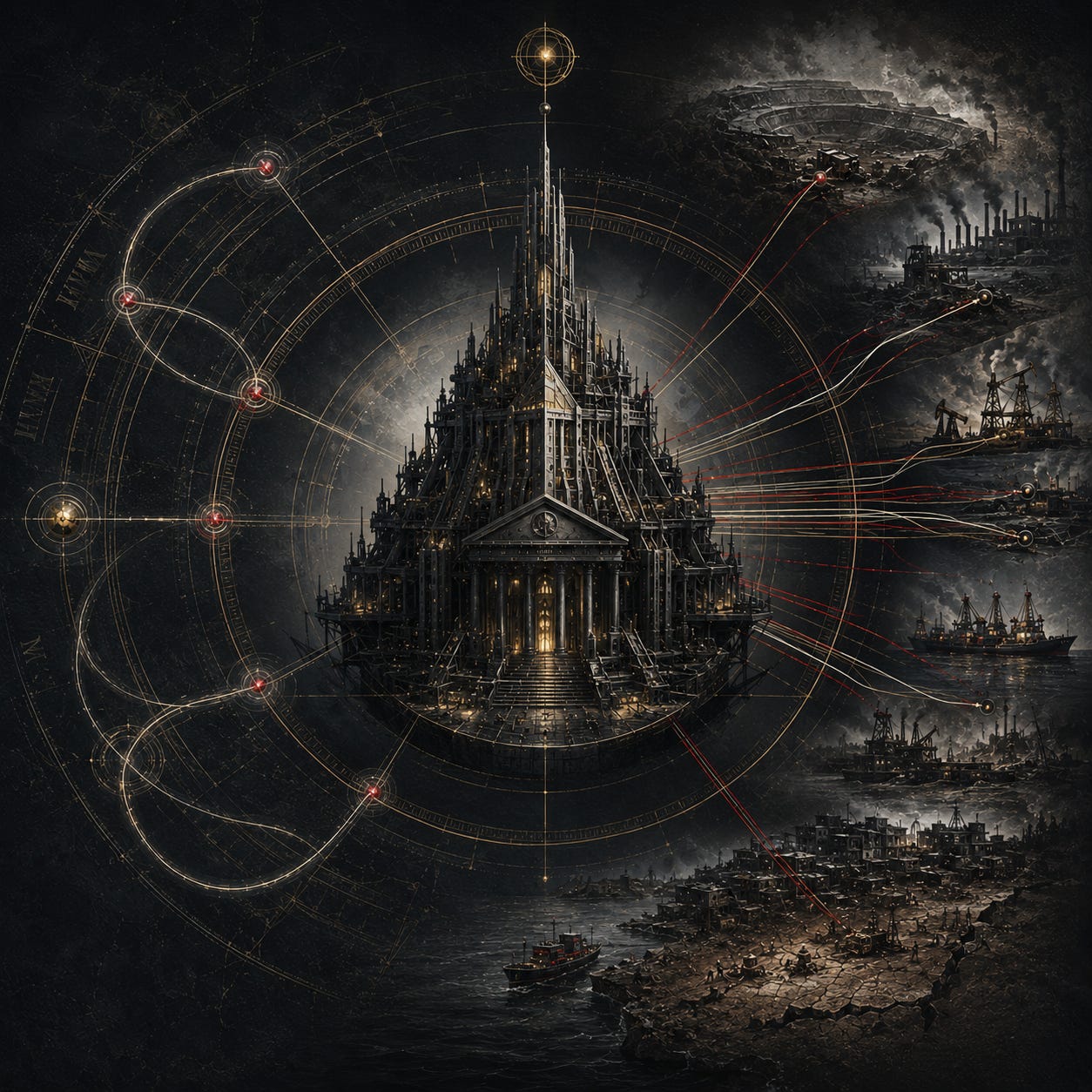
Summary
The full study develops the concept of the law of realization: the law by which capitalism must transform surplus value into monetary profit through effective demand.
The basic problem is simple. Capitalism does not only need to produce commodities. It also needs to sell them. A commodity may contain surplus value, but this surplus value becomes profit for capital only when the commodity is sold and returns as money.
Thanks for reading Polar Marxism! Subscribe for free to receive new posts and support my work.
The law of realization means that capitalist profit must be transformed into money through effective demand.
This creates the central problem of the work. At the level of one capitalist, profit appears simple: a commodity is sold, and money returns. But at the level of the whole capitalist system, the question becomes much harder. Where does the aggregate effective demand come from that allows the whole system to realize profit?
The answer developed in the study is that capitalism solves this problem through two main axes:
debt, or realization in time;
outlet, or realization in space.
Debt as realization in time
Debt allows capitalism to pull future income into the present.
When present effective demand is insufficient, debt creates additional purchasing power. Households borrow against future wages. Firms borrow against future profits. States borrow against future taxes and fiscal capacity.
Debt is temporal realization: the transfer of future income into present purchasing power.
This means that debt is not an accidental feature of capitalism. It is one of the main mechanisms through which profit is realized. The capitalist system constantly creates obligations against the future so that profit can be realized in the present.
But debt cannot solve the problem by itself. If capitalism relied only on debt, the system would enter an avalanche of obligations. Debt would grow endlessly, and the system would break before it could become a stable form of reproduction.
Debt gives capitalism time. It does not give capitalism a final solution.
Outlet as realization in space
The second axis is outlet.
By outlet, the study means “external outlet”: the spatial mechanism through which capitalism realizes itself outside its own center.
Capitalism must move outward. It must search for external markets, external investment fields, cheap labor, raw materials, dependent territories, and peripheral zones. These external spaces become the field through which the capitalist center realizes profit.
Outlet is spatial realization: the displacement of the realization problem into external space.
This is where the periphery appears.
The periphery is not simply a poor region. It is produced by capital as an external space of realization. It is organized through unequal exchange, cheap labor, resource extraction, dependency, political subordination, and degradation.
The periphery is organized imperial outlet.
This is why capitalism does not develop the periphery in the same way it develops the center. The periphery is developed only insofar as its development serves the realization needs of the center. It is modernized selectively, distorted structurally, and kept dependent.
Debt and outlet together
Debt and outlet are not separate solutions. They are two axes of the same law.
Debt moves the contradiction into the future.
Outlet moves the contradiction into external space.
Together, they form the real movement of capitalism.
Debt finances outlet; outlet validates debt.
This is why contemporary capitalism is best understood as State-Debt Imperialist Monopoly Capitalism.
The state concentrates both axes. It organizes debt through deficits, public borrowing, central banks, financial markets, bailouts, military expenditure, and austerity. It organizes the outlet through imperial power, sanctions, trade regimes, military force, resource control, global value chains, and the political subordination of the periphery.
The modern capitalist center is therefore not only monopoly capitalism, not only financial capitalism, and not only imperialism. It is all of these together, concentrated through the state and driven by the law of realization.
Crisis and the second breath of capital
The study then moves from realization to crisis.
Capitalism has an internal historical counter: the rate of exploitation, understood as the relation between capital income and labor income. As capital income rises relative to labor income, exploitation rises.
Over time, this tendency reaches a limit. At that point, capitalism enters a deeper crisis. This is not just an ordinary recession or market correction. It is a crisis of capitalism itself.
World war becomes the historical form through which this crisis is reset.
The second breath of capital is the renewal of capitalism through crisis, destruction, devaluation, war, and reset.
World war destroys, devalues, reorganizes, and resets the conditions of accumulation. It does not abolish capitalism. It gives capital time to begin a new cycle.
This is why the “second breath” is not salvation. It is a temporary renewal that pushes the contradiction into the future while also creating the conditions for stronger opposition.
The Mefo-law
The final part of the study examines Nazi Germany as a concentrated historical example.
Germany after the First World War was a blocked capitalist country. It had lost colonies, faced reparations, depended on American credit, and became trapped in the interwar debt-reparations structure. When American credit stopped flowing and the Great Depression intensified the pressure, Germany entered a situation where the law of realization could no longer operate normally.
The Nazi state responded through hidden debt, militarization, labor discipline, controlled trade, autarky, and expansion.
The key historical symbol here is the MEFO bill: a financial instrument used to fund rearmament through hidden state-backed obligations.
The mefo-law is the fascized form of the law of realization: blocked realization, debt-financed militarization, coercive expansion, and fascization.
Germany used debt to create military production in the present and then sought to validate that debt through future conquest. In this form, the law of debt and the law of outlet fused into coercive expansion.
Fascization appears here as the political form of blocked realization. Capital cannot realize itself normally, so the state reorganizes society around militarized realization and future conquest.
Why this matters for Polar Marxism
The law of realization matters because it proves the limits of capitalism.
Capitalism produces crisis internally and degradation externally. It produces debt, outlet, periphery, unequal exchange, coercion, reset, and war. It cannot develop the periphery as an equal center of development through its own normal laws.
This is why the development of the East, China, BRICS, and the broader Global South cannot be explained as the simple movement of capitalism. If capitalism normally produces peripheral degradation, then development outside the Western center requires another logic.
That logic is anticapital.
The law of realization therefore prepares the next step of Polar Marxism. It shows what capital can do, what capital cannot do, and why another historical force must appear from the limits of capital itself.
Continue from here
This post is only a short introduction to the full research text.
The complete study develops the law of realization in detail: surplus value and realized profit, debt as realization in time, outlet as realization in space, the periphery as imperial outlet, state-debt imperialist monopoly capitalism, the second breath of capital, and the mefo-law as the fascized form of blocked realization.
Subscribe for free to receive new posts and support my work.
How to cite this article
Vilen Isteni (2026). "The Law of Realization." Polar Marxism. https://polarmarxism.com/en/publications/substack/the-law-of-realization

Discuss the Publication
Email me if you want to discuss this publication.